
MASTER GUIDE TO ARTIFICIAL INTELLIGENCE
Fundamentals of Artificial Intelligence (AI)
From classical algorithms and machine learning to generative foundation models: understand the core technical pillars, methodologies, and fundamental concepts driving our era’s greatest technological leap.
What Is Artificial Intelligence and Why Is It Redefining Modern Enterprise?
AI has transcended science fiction to become the cognitive backbone of the 21st century. Grasping its underlying mechanics is no longer just for software engineers—it is an indispensable strategic imperative for organizational leadership.
At its broadest core, Artificial Intelligence encompasses computational paradigms enabling machines to emulate intelligent behavior: perceiving complex environments, understanding natural language, inferring patterns from massive datasets, and making decisions under uncertainty.
Today’s paradigm shift is driven by Deep Learning and the groundbreaking Transformer architecture. Modern foundation models go far beyond statistical classification or tabular prediction—they synthesize structured knowledge, perform multi-step causal reasoning, and generate code, text, audio, and video with unprecedented fidelity.
Essential Pillars of Artificial Intelligence
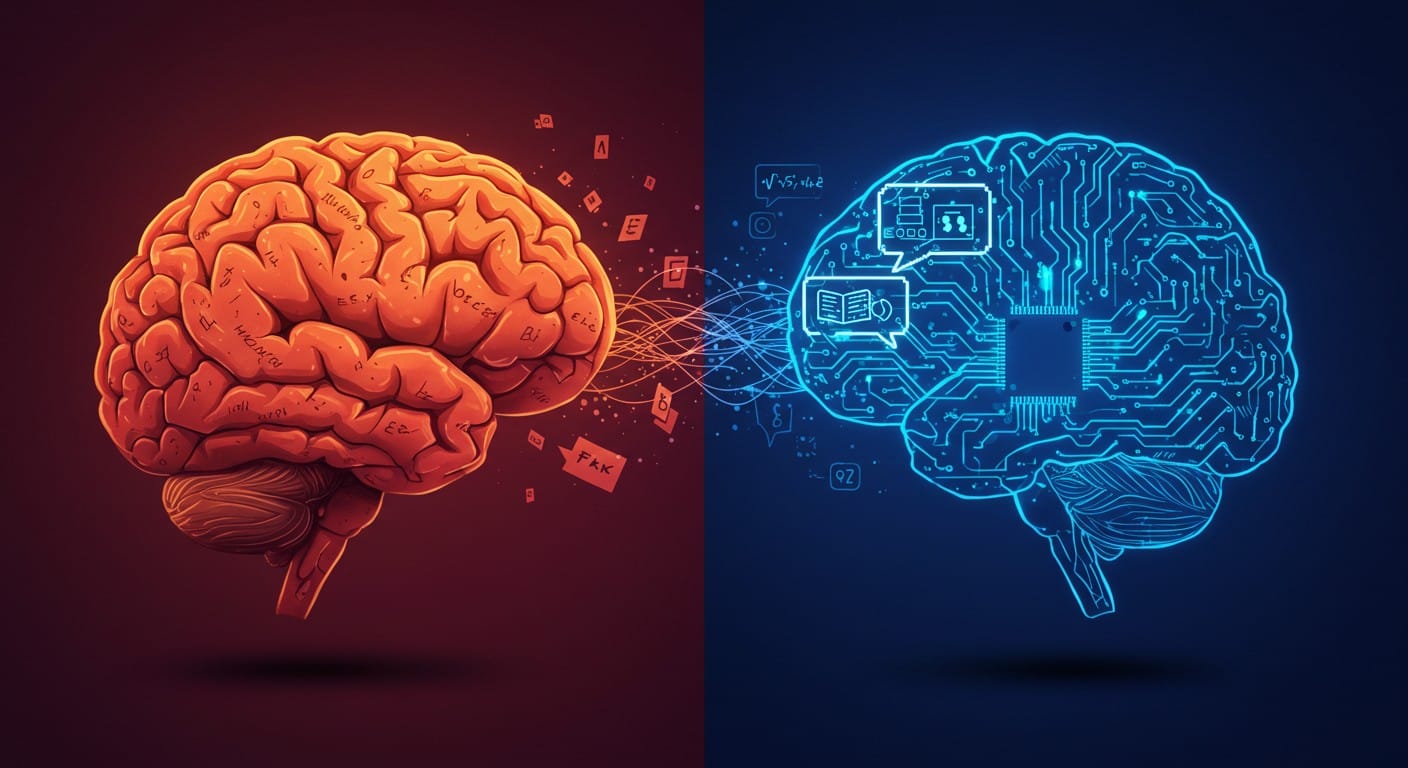
The foundational disciplines underpinning scientific research and enterprise implementations of intelligent systems.


Key Concepts Every Professional Must Master
The technical mechanisms separating production-grade AI implementations from superficial buzzwords.
🧠
Transformers & Self-Attention
Mecanismo publicado en 2017 por Google (“Attention Is All You Need”) que permite ponderar la relevancia de cada palabra respecto a las demás simultáneamente.
🔍
RAG (Retrieval-Augmented Generation)
Architecture integrating generative foundation models with private vector retrieval databases, delivering grounded, up-to-date, citation-backed answers without weight fine-tuning.
🎯
Fine-Tuning & LoRA
Targeted weight adaptation of pre-trained models using domain-specific datasets and Low-Rank Adaptation (LoRA) to instill custom syntax, tone, and deterministic behavior.
🛡️
Alignment & RLHF
Reinforcement Learning from Human Feedback (RLHF) and DPO ensuring models align with human intent across three core tenets: Helpful, Honest, and Harmless.
⚡
Context Window Capacity
The active working memory budget a model can process in a single prompt session—ranging from 128k up to 2M+ tokens in Gemini 1.5 Pro.
🌐
Augmented Intelligence
The Human-in-the-Loop paradigm where cognitive agents act as collaborative copilots, amplifying human analytical judgment rather than acting as opaque replacements.
Technological Evolution: From Symbolic Rules to Cognitive Systems
How Machines Learn: Data, Weights, and Gradient Descent
Unlike classical programming where developers hand-craft rigid IF/ELSE logic, machine learning systems take input-output training pairs and inductively deduce underlying mathematical functions.
Gradient descent and backpropagation iteratively adjust billions of weight parameters until empirical loss across objective benchmark functions is minimized.
Read the complete guide to learning paradigms →
From Passive Chatbots to Proactive Autonomous Agents
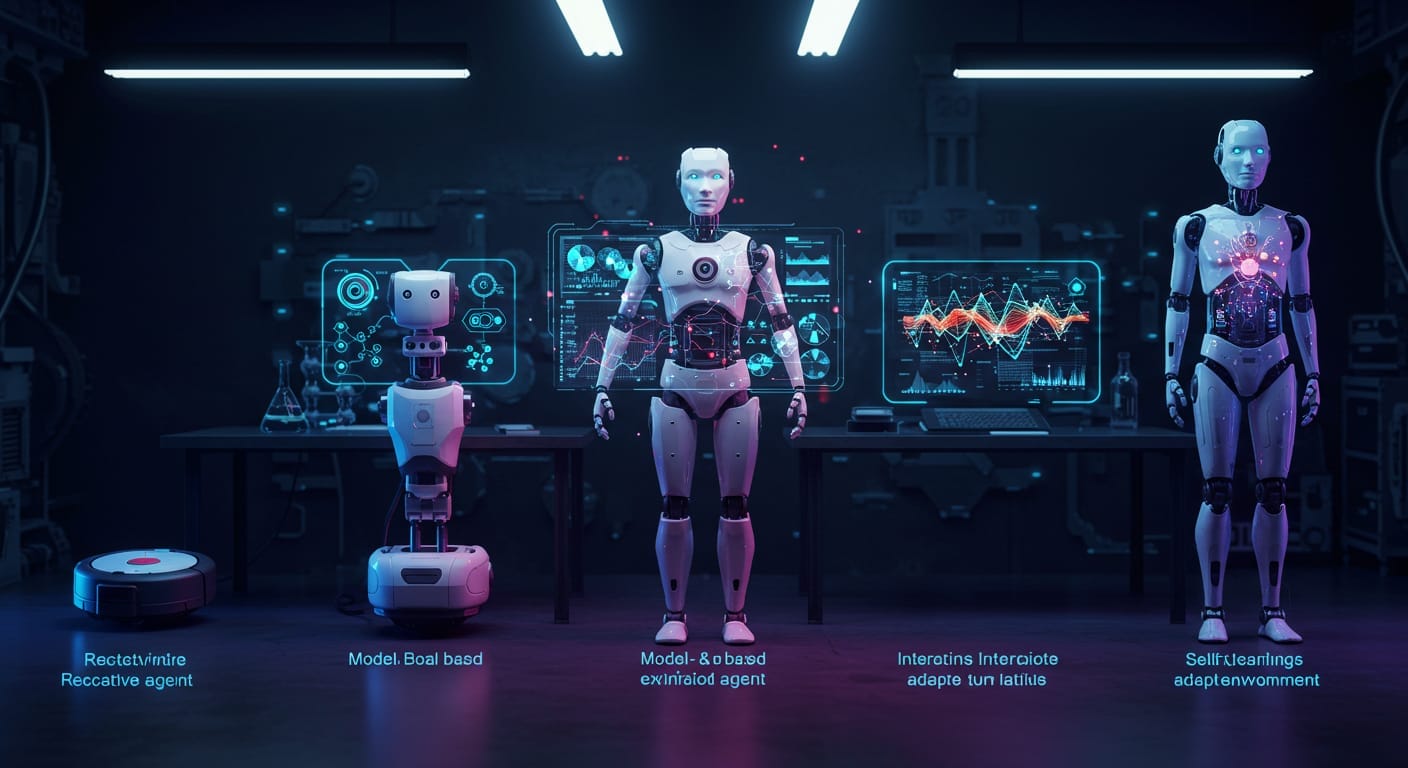
The defining leap of modern AI lies not in answering isolated conversational questions, but in taking meaningful digital action: navigating interfaces, mutating database schemas, and orchestrating workflows.
Multi-agent systems decompose complex organizational mandates across specialized nodes (researcher, writer, critic, and verifier), attaining reliability on par with human teams.
Explore AI agent platforms →Maturity Levels in Enterprise AI Adoption
A structured, phased roadmap to deploy artificial intelligence sustainably and profitably across corporate operations.
Ad-Hoc Assistance & SaaS
Direct employee usage of commercial SaaS interfaces like ChatGPT Plus, Claude Pro, or Copilot for drafting, document synthesis, and ad-hoc translation.
- Immediate individual productivity gains
- Data leakage risks absent enterprise compliance agreements
- Zero technical deployment friction
Enterprise Integration & RAG
Interfacing foundation models via enterprise APIs with internal corporate repositories (ERP, CRM, Notion, and internal documentation) via vector databases.
- 100% grounded, traceable organizational knowledge
- Elimination of hallucinations with verifiable citations
- Zero-retention corporate data privacy via dedicated APIs
Autonomous Agentic Workflows
Orchestrating autonomous workflows with task-tuned models and specialized agents executing live transactions, continuous testing, and 24/7 operations.
- End-to-end process automation and self-healing systems
- Self-hosted private models optimized for extreme latency and cost
- Defensible proprietary competitive moat
Governance, Algorithmic Bias & Safety in AI
Responsible AI deployment requires ethical governance, regulatory compliance, and rigorous technical guardrails.
⚖️ Algorithmic Bias Mitigation & Fairness
Foundation models inherently reflect and can amplify historical biases embedded in training corpora. Rigorous data auditing and statistical parity evaluations are vital.
🔒 Regulatory Compliance (EU AI Act)
European regulation classifies AI architectures according to risk tiers (unacceptable, high risk, general purpose). Understanding legal duties prevents fines and ensures algorithmic accountability.
🛡️ Security & Adversarial Red Teaming
Continuous adversarial testing to preempt prompt injection exploits, model inversion attacks, training data leakage, and unintended model behaviors in production.
Related Guides & In-Depth Technical Analyses
Explore foundational machine learning principles through our hands-on guides and tutorials.
Ready to Deploy Enterprise AI Solutions Across Your Business?
At ComunicaGenia, we architect enterprise AI strategies, high-performance RAG pipelines, and agentic workflows tailored to your measurable business objectives.
This post is also available in: