
Intelligent Automation
AI Agents: Tools, Architecture, and Practical Applications
Autonomous systems, agentic automation, and multi-agent workflows driving enterprise productivity
The Frontier of Agentic and Intelligent Automation
From passive text-generation models to proactive systems that reason, plan, and act autonomously.
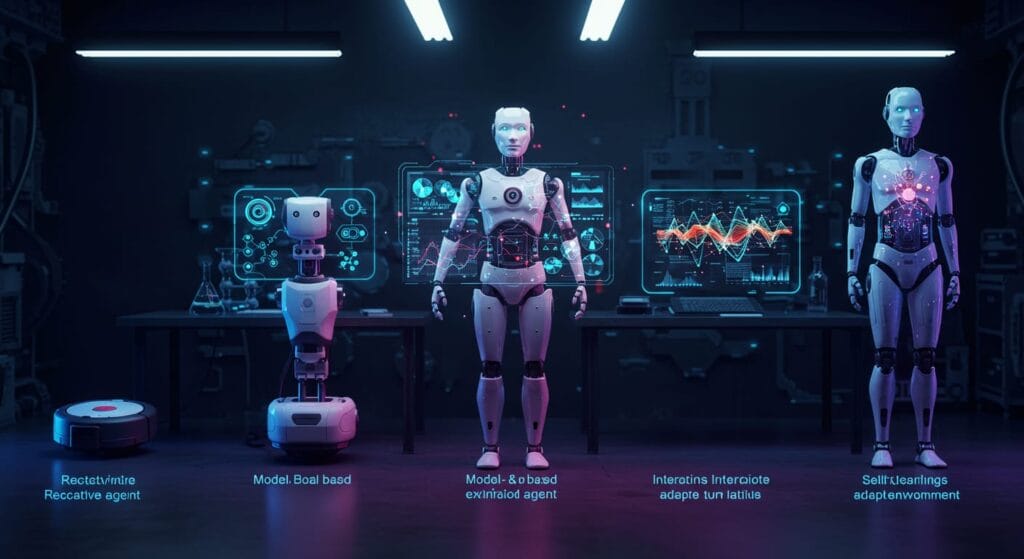
Los Artificial Intelligence Agents represent the most transformative evolutionary leap in generative technology. Unlike traditional chatbots that merely respond to static user prompts, an autonomous agent perceives its digital environment, formulates multi-step action plans, interfaces with external APIs and web browsers, and executes complex objectives with minimal human oversight.
By integrating frontier language models with persistent vector memory, automated browser orchestration, databases, and APIs, autonomous agents can submit web forms, synthesize real-time market data, write software, and coordinate within multi-agent systems where each agent assumes a specialized operational role.
Explore leading agentic frameworks, production use cases, and how autonomous automation is redefining the future of enterprise knowledge work.
Pioneering Frameworks
Leading AI Agent Platforms and Tools
Industry-leading solutions for browser automation, autonomous code execution, and private local deployment




OpenAI Innovation
ChatGPT Operator: Next-Generation Autonomous Web Agent
Imagine an intelligent digital assistant that doesn’t just answer questions, but autonomously navigates web apps, compares vendor pricing, and completes transactions on your behalf. In a high-velocity business landscape, ChatGPT Operator frees teams from repetitive operational tasks to focus on strategic initiatives.
Enterprise Use Cases
Production Applications of AI Agents
How leading enterprises deploy autonomous agents across mission-critical workflows
Digital Marketing & Growth
Real-time competitor intelligence tracking, automated B2B lead enrichment, and dynamic multi-channel campaign budget optimization.
Customer Experience & Support
Autonomous 24/7 resolution of complex customer tickets with direct CRM read/write access, order tracking, and instant automated refund handling.
Software Engineering & DevOps
Autonomous coding agents that review Pull Requests, patch security vulnerabilities, synthesize unit test suites, and execute CI/CD deployment runs.
Logistics & Supply Chain
Predictive inventory management, automated shipping dispatch tracking, vendor bill-of-lading reconciliation, and invoice discrepancy auditing.

Trends & Future Outlook
Operator-Class Systems: The Next Frontier in Intelligent Automation
Discover how Operator-class agentic systems transcend brittle rule-based bots. Built on frontier test-time reasoning, they dynamically adapt to UI changes, self-correct upon encountering web exceptions, and make informed choices to streamline daily enterprise workflows.
Foundational Guides on AI Agents
Deep dive into multi-agent architecture, empirical benchmarks, and technical trade-offs


Frequently Asked Questions
Frequently Asked Questions (FAQ)
What exactly is an AI agent?
An AI agent is an autonomous software system capable of perceiving its environment (via DOM interfaces, APIs, or data streams), formulating reasoned logic, and executing goal-directed tool actions without constant human prompting.
How do AI agents differ from classic generative models like GPT?
Standard LLMs are passive: they await a prompt and output text or code. AI agents utilize the LLM as their reasoning engine, but augment it with long-term memory, external tool calling (browsers, databases, APIs), and an iterative execution loop (ReAct) to complete multi-step tasks.
Are AI agents secure for enterprise deployment?
Yes, provided they are hosted within isolated sandboxes, governed by least-privilege API scoping, and monitored by human-in-the-loop validation checkpoints for critical actions like financial payouts or data deletion.
Do users need technical coding expertise to deploy them?
Not necessarily. A rapidly growing tier of no-code and low-code orchestration platforms allows business teams to configure, evaluate, and chain autonomous agents using visual drag-and-drop workflows or plain natural language.
What is the immediate horizon for agentic automation?
The dominant paradigm is shifting toward collaborative multi-agent ecosystems, where swarms of specialized micro-agents (data analyst, researcher, developer, compliance auditor) collaborate sequentially to deliver end-to-end projects in minutes.
Complementary Resources & Knowledge Bases
Discover self-hosted tools, on-premise execution, and core artificial intelligence terminology
AnythingLLM: Private Enterprise AI
Self-hosted private document intelligence with zero data leakage.
Pinokio AI: 1-Click Local Automation
Install and orchestrate autonomous AI applications locally with zero terminal friction.
AI Terminology Glossary
Encyclopedic guide to essential generative AI concepts, metrics, and industry acronyms.
Artificial Intelligence Pillar Hub
Explore all foundation models, technical teardowns, and master guides across the AI ecosystem.
Ready to Deploy Autonomous AI Agents Across Your Enterprise?
We guide your organization through agentic platform selection, secure tool integration, and custom autonomous workflow engineering.
This post is also available in: