
Artificial intelligence

Google’s Gemma 3: Cutting-edge AI, open to everyone

Gemma 3 is the third generation of Google’s family of open AI models. Imagine an assistant capable of answering questions, analyzing images and reasoning in more than 140 languages, whether from your phone or with a single graphics card (GPU). Based on the architecture of the Gemini models and launched in March 2025, its design

Google’s Gemma 3: Cutting-edge AI, open to everyone Read More »
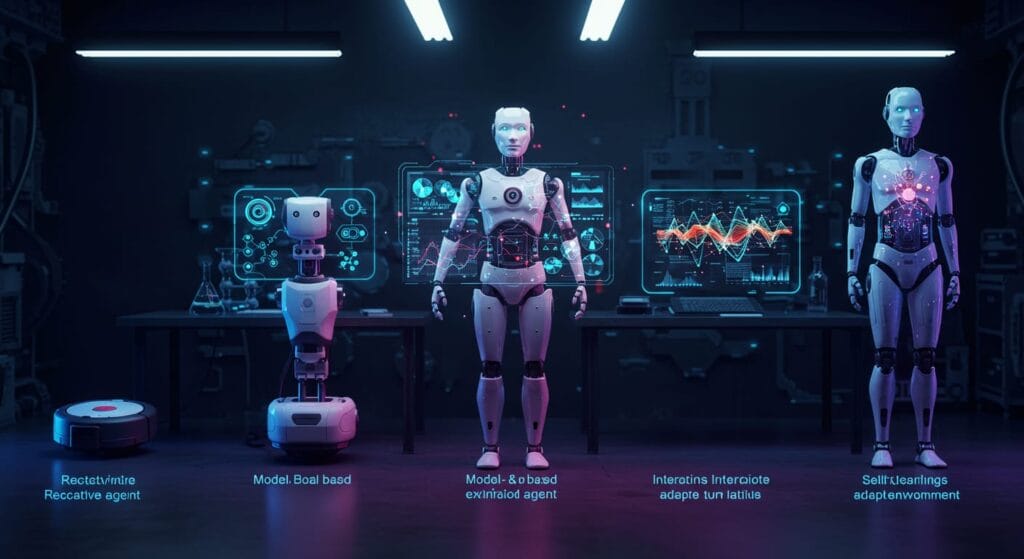
Types of AI Agents: A practical guide to distinguish them

Artificial intelligence (AI) agents are autonomous entities that perceive their environment (whether physical or virtual) through sensors and act on it through actuators to achieve specific objectives. In a physical agent, the sensors can be cameras, microphones or proximity detectors, and the actuators, motors or speakers. In a software agent, sensors are input data (such

Types of AI Agents: A practical guide to distinguish them Read More »

Multiagent Systems: When AIs learn to work as a team

In the field of artificial intelligence (AI), multi-agent systems represent a fascinating frontier: an environment where multiple AIs collaborate to solve problems that would be too complex for one AI. Instead of relying on a single, monolithic model, tasks are broken down into smaller components, assigned to specialized agents. This dynamic, similar to that of

Multiagent Systems: When AIs learn to work as a team Read More »

Google Nano Banana: the creative kit for editing images with AI

Tools and features emerge every day that transform the way we interact with digital content. Among these innovations, a curious and striking concept has captured the attention of creators and technology enthusiasts: “Nano Banana”. Far from being a stand-alone model, Nano Banana is actually a set of advanced image generation and editing features, integrated within

Google Nano Banana: the creative kit for editing images with AI Read More »

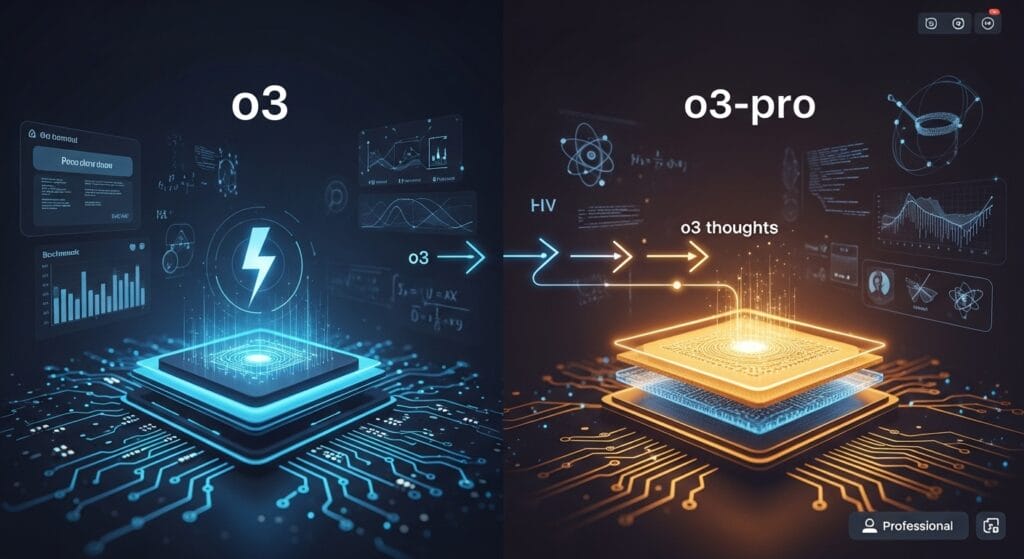
o3-pro: The evolution of reasoning in OpenAI

Within the OpenAI family of reasoning models, the model o3 It already represented a great step forward by offering greater reliability in solving complex problems.  However, in June 2025 the company introduced o3-pro, a version designed to take those capabilities to the next level and fill a specific niche: tasks where absolute precision matters more

o3-pro: The evolution of reasoning in OpenAI Read More »

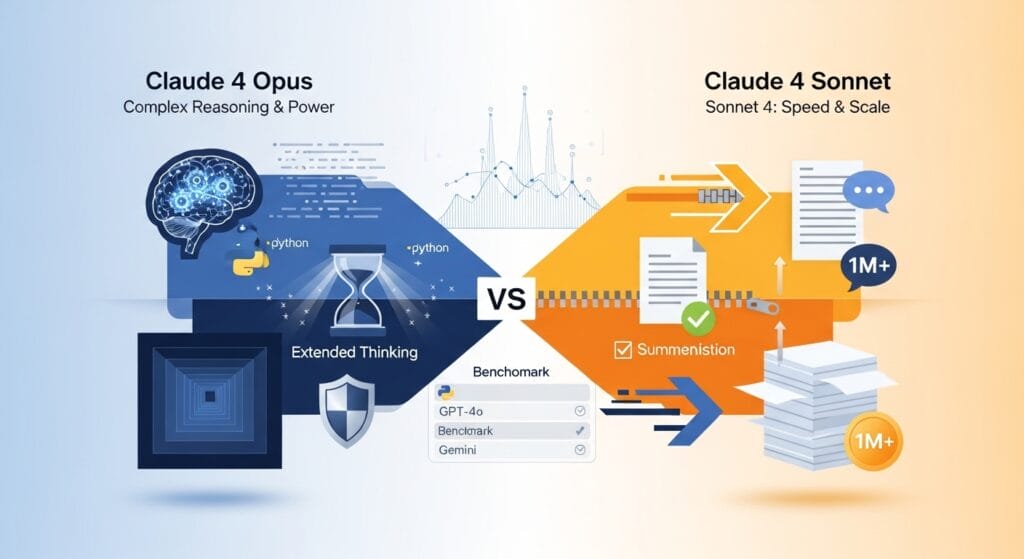
Claude 4: Real innovation or a modest evolution?

In May 2025, Anthropic’s comprehensive platform introduced Claude 4, a family of language models that seeks to improve reasoning and agentive tasks. With variants like Opus 4 (updated to 4.1 in August) and Sonnet 4, this iteration directly competes with giants like OpenAI’s GPT-4o and Google’s Gemini. When exploring Algorithms and Artificial Intelligence, Claude 4

Claude 4: Real innovation or a modest evolution? Read More »

This is how Comet, the browser with Artificial Intelligence from Perplexity, works

Imagine opening your browser and, instead of wasting minutes searching through endless tabs, an assistant organizes your information, summarizes your emails, and even makes purchases for you. Sounds like science fiction, right? Well, that is the future that Perplexity wants to bring us closer to with Comet, its new browser with Artificial Intelligence. Far from

This is how Comet, the browser with Artificial Intelligence from Perplexity, works Read More »

Grok 4: Musk’s unfiltered genius or the assistant you need?

On July 9, 2025, the world of artificial intelligence felt a big change. xAI, Elon Musk’s company, launched Grok 4, its most advanced language model to date, and the impact was immediate. The evolution of xAI has given rise to an assistant capable of tackling highly complex tasks without restrictions. Programming oriented to Artificial Intelligence

Grok 4: Musk’s unfiltered genius or the assistant you need? Read More »

This site is registered on wpml.org as a development site. Switch to a production site key to remove this banner.